Current AI is powerful.
But profoundly forgetful.
Every conversation starts from zero. Every insight dissolves. The AI that spent hours understanding you resets completely the next day. Meaningful long-term relationships between humans and AI remain structurally impossible.
Every session starts from zero. History dissolves. The person remains a stranger to the system they rely on daily.
Context windows have hard limits. Long-term continuity is architecturally constrained by design.
AI systems have no stable sense of who they're talking to across time. Every conversation is a first meeting.
Meaningful long-term human–AI relationships are largely an open research frontier.
Today's AI is not the superhuman intellect we imagined. Optimized for the majority through RLHF, it has inherited human cognitive limitations at scale — amplifying them through feedback loops rather than transcending them. Those who use AI as a genuine intellectual partner deserve something built differently.
Personal AI Systems
Designing AI that operates as a long-term companion — measuring relationship continuity across hundreds of sessions.
AI Memory Architecture
Structuring memory systems beyond context windows, with quantifiable retention across extended interactions.
Persona Stability
Both users and AI form personas through sustained interaction — and both can drift, stabilize, or shift depending on context and relationship. We study how these paired personas evolve and how consistently they hold over time.
Context Control Systems
Maintaining stable context to preserve identity and continuity over long interactions.
Human–AI Coevolution
Studying how humans and AI grow together through sustained interaction over time.
Inherited Flaws Research
LLMs inherit human cognitive flaws through training data and RLHF. We study this mechanism and explore whether small-scale models on curated data can reduce inherited bias.
Golden Persona Framework
Modeling each user as a dynamic, multi-layered persona across contexts — not a static profile, but a living structure that drifts, stabilizes, and evolves alongside the person.
RLHF & Alignment Limitations
Exploring how reinforcement learning from human feedback optimizes for approval rather than truth — and its structural implications for AI reliability and long-term trust.
Cognitive AI Research
Exploring how personal AI systems can better model individual cognitive patterns, preferences, and reasoning styles over time.
Ankina Lab began with a simple question: why do AI systems forget the people they interact with?
Every conversation starts from zero. Every insight dissolves. After months of working closely with AI as a genuine intellectual partner — building systems, thinking through ideas, navigating decisions — the absence of memory felt structural. Not a limitation to work around, but a problem worth solving.
Current AI is optimized for the majority. Ankina Lab researches for those who use AI as a genuine intellectual partner — not a shortcut, but a collaborator that grows alongside them.
The name Ankina comes from two companions — Kinako and Anko — who are present in every late-night session, even when the AI is not.
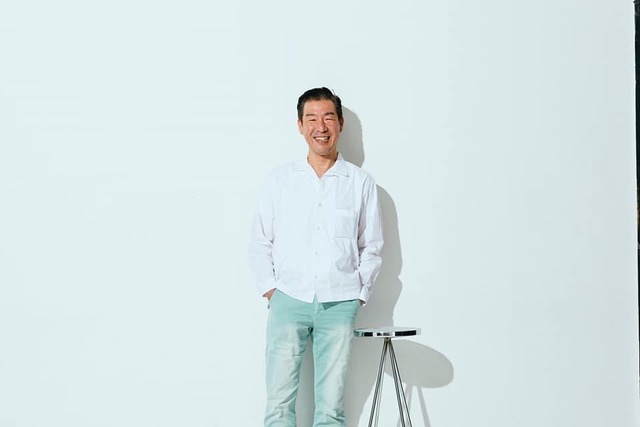
Yasuhiro Kasai
Former CEO of a listed company. Former CTO and Credit Risk Officer at a financial institution, where he developed dynamic risk scoring systems. Now building AI systems that remember — with AI as the primary development partner. After years of daily, uninterrupted dialogue with LLMs, he grew acutely aware of what they could and couldn't do — and decided that gap was worth researching.


10.5281/zenodo.20561515
Research collaboration
Open to academic and independent researchers working on personal AI, memory systems, and human–AI interaction.
Applied AI projects
Consulting and applied research for organizations building next-generation AI systems.